Journaling vs Meditation: Which Calms You?
In short
In journaling vs meditation, both calm a busy mind in different ways, journaling moves the noise onto the page while meditation teaches you to sit with it, and together they steady you more than either alone.
- Journaling gets the thoughts out, so you can see them clearly.
- Meditation builds your ability to notice thoughts without chasing them.
- Many people meditate to settle, then journal to make sense of what comes up.
Your mind won't switch off, so you go looking for something that helps. Half the internet says write it all down. The other half says close your eyes and breathe. Standing there, frazzled, you just want to know which one to do.
Here's the kind answer. It depends on what your mind is doing right now, and you don't have to pick only one.
Journaling and meditation both quiet a busy mind, but they work from opposite directions. Knowing which is which makes choosing simple, and combining them makes both stronger.
What journaling does
Journaling moves the noise outward.
You take the swirl in your head and put it on the page, where it gets edges. A thought left loose can loop forever, because thoughts have no end. The same thought written down has a beginning and a full stop, and you can read it back and often find it smaller than it felt.
This is the practice for clarity. When a worry is specific and you need to understand it, journaling gives it shape.
What meditation does
Meditation works the other way. Instead of getting thoughts out, it changes your relationship to them.
You rest your attention somewhere steady, usually the breath, and when a thought pulls you away, you notice and come back. Over time that gentle returning teaches your nervous system to settle, and teaches you that a thought is just a thought, not an order you have to follow.
This is the practice for settling. When you're too activated to think clearly, meditation brings the volume down. If you're new to it, meditation for beginners keeps the first attempts easy and forgiving.
Journaling clears the desk. Meditation teaches you that you don't have to act on everything on it.
When to choose which
A quick way to decide in the moment.
- The worry is specific and looping: journal it. Get it out and look at it.
- You're wound up and can't think straight: meditate or breathe first.
- You need to make a decision or untangle something: journaling gives you the thread.
- You feel scattered and need to come back to your body: meditation grounds you.
- You have a notebook and ten quiet minutes: journaling rewards the space.
- You have two minutes and a tight chest: a short breathing practice helps fast.
Neither is better. They simply meet you in different states.

How to use them together
This is where they shine, because each one fixes what the other can't.
When you're too activated to write, meditation or a few rounds of slow breathing can take the edge off. Body first, words after. Once your system has come down a little, the page feels possible again, and you'll often write more honestly.
So try this gentle order. Sit for a few quiet breaths, just noticing the air going in and out. Then, while you're still settled, open your journal and write whatever surfaced while you sat. The meditation makes space, and the journaling catches what shows up in it before it drifts off.
For anxious nights especially, this pairing is kind. You might start with breathing exercises for anxiety to settle your body, then move into journaling for anxiety to lift the worry out of the loop.
The honest verdict
There's no winner here, and you don't have to commit to one for life. Some days you need to get the thoughts out. Other days you need to stop chasing them.
The quiet truth is that they belong together. Breathe to settle, write to understand, and you've covered both halves of a busy mind. That's why it helps to keep them in one place, so calming down and making sense of things sit side by side.
Where to go next
If meditation is new to you, meditation for beginners makes the first sits gentle, and breathing exercises for anxiety gives you something steadying for the hardest moments.
To explore the writing side, journaling for anxiety shares prompts for a racing mind.
And if you'd like breathing and journaling together in one calm, private space, the Let it be... app holds both gently, free to start, with your entries staying on your device.
Take away
- Journaling and meditation aren't rivals, they calm you from different directions.
- Choose journaling when you need to untangle and understand a worry.
- Choose meditation when you need to come down from a high, racing state.
- A gentle combo: a few quiet breaths first, then write whatever surfaced.
Frequently asked
- Journaling moves your thoughts outward, onto the page, where a looping worry gets edges and you can finally see it. Meditation turns attention inward and trains you to notice thoughts without chasing them, usually by resting on the breath. One clears the noise out, the other changes your relationship to it.
- Both help, in different moments. When you're too activated to think, meditation or slow breathing can bring your body down first. When the worry is specific and looping, journaling gives it shape so it stops spinning. Many people find that breathing settles them enough to then write clearly, so using both works well.
- Yes, and they pair naturally. A simple routine is a few minutes of quiet breathing to settle, then a short journal entry about whatever surfaced while you sat. The meditation calms your body and clears space, and the journaling catches the insight before it slips away.
Did this help you feel a little steadier?
Reflections
Gentle thoughts from readers. Kindness only, this is a safe space.
Be the first to share a gentle reflection.
Ready to start journaling?
Let it be... gives you guided prompts, mood tracking and breathing exercises in one calm app.


Continue your journey
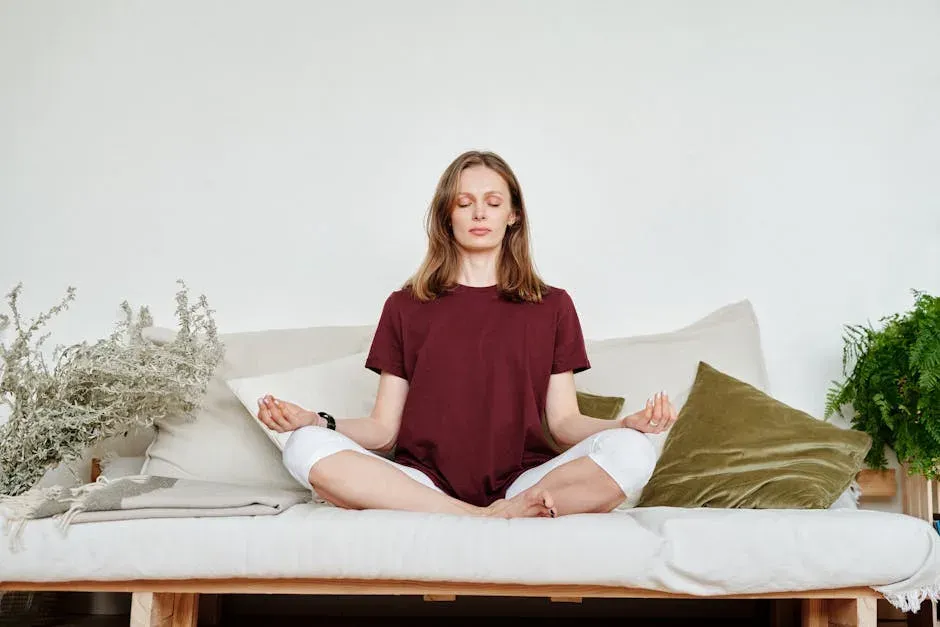
Meditation for Beginners: A Gentle Start
Meditation for beginners, made simple: what it really is, a soft step-by-step first sit, and how to keep going when your mind wanders, as it will.
Read→
Journaling for Anxiety: Quiet a Racing Mind
How journaling for anxiety helps lift worries out of the loop and onto the page. Calming prompts and a simple practice for a mind that won't slow down.
Read→
6 Breathing Exercises for Anxiety, Try Right Now
Six simple breathing exercises for anxiety, each with clear, soothing steps you can follow the moment your chest feels tight or your thoughts start to race.
Read→
Body Scan Meditation: A Gentle Tour of Calm
Body scan meditation guides your attention slowly through the body, softening tension as you go. A soothing, step-by-step way to practice and settle in.
Read→