5 Minute Meditation: A Small Pause That Helps
In short
A 5 minute meditation is a small, gentle pause where you rest your attention on your breath and softly return whenever it wanders, just enough to feel a little steadier.
- Five minutes is plenty. A short sit you actually do beats a long one you skip.
- You're not emptying your mind, only resting it and gently returning.
- It fits anywhere, a work break, the morning, a quiet moment before bed.
You don't have twenty quiet minutes. You barely have a quiet hallway. But somewhere between the emails and the to-do list, you have five minutes, and five minutes is genuinely enough.
A short meditation isn't a watered-down version of the real thing. It's a small, complete pause that lets your mind catch its breath and your shoulders come down from your ears.
You don't need a cushion, a special room, or any experience at all. Just five minutes and a willingness to sit with yourself.
Why five minutes is plenty
It's easy to think meditation only counts if it's long. It doesn't. What matters far more than length is how often you come back to it.
Five minutes most days will do more for you than half an hour once in a blue moon. Short and frequent wins, because it's something you can actually keep.
And five minutes is enough to do real work. It's enough to slow your breathing, settle your body, and give your busy mind a genuine rest. You leave a little softer than you arrived, which is the whole idea.
A small pause, taken often, quietly reshapes a day. You don't need a lot of time to come back to yourself, just a little, on purpose.
Your 5 minute meditation, step by step
You can do this almost anywhere, at your desk, on a bench, in your car before you go inside. Read it through once, then let the words go and follow along.
- Set a timer for five minutes. This way you can let go of clock-watching and simply be where you are.
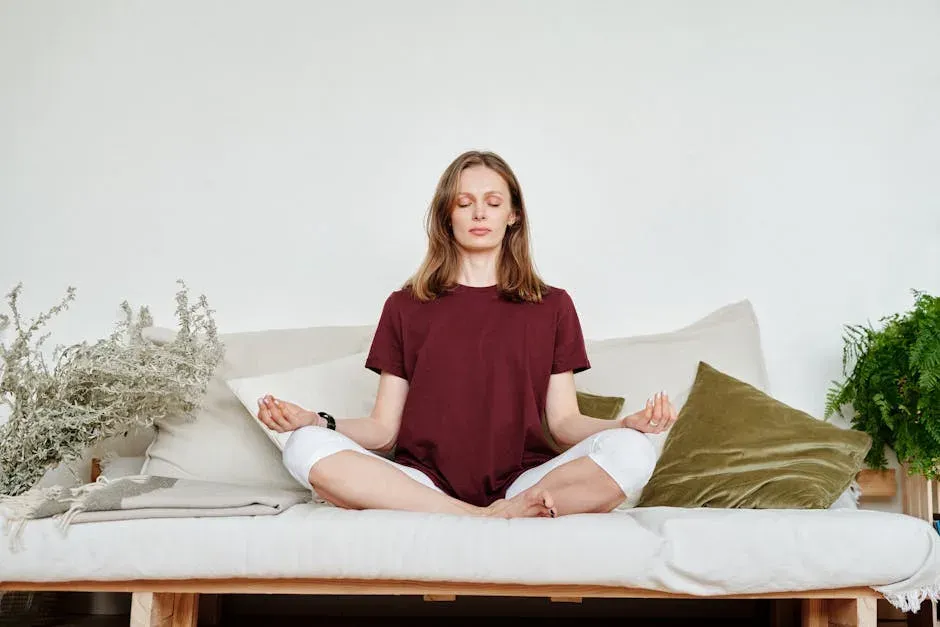
- Find a comfortable seat. A chair is perfect, feet flat on the floor, hands resting in your lap. Sit upright but easy, like you're settling in, not bracing.
- Close your eyes, or let your gaze rest softly downward if that feels better.
- Take a few slow breaths to arrive. Breathe in gently, and let each breath out feel a little longer and softer. Then let your breathing settle into its own natural rhythm.
- Rest your attention on the breath. Choose where you feel it most clearly, the cool air at your nose, or the gentle rise and fall of your belly, and let your attention rest there lightly.
- When your mind wanders, gently return. Notice the drift, softly note "thinking," and bring your attention back to the breath. No frustration. This noticing and returning is the practice itself.
- When the timer sounds, close gently. Take one more slow breath before you open your eyes. Notice how you feel, without grading it, then carry that little bit of calm back into your day.
The wandering is part of it
You'll sit down, rest on your breath, and within seconds find yourself planning lunch or replaying a conversation. That's not a failed meditation. That's exactly how it goes for everyone.
The skill isn't keeping your mind blank, that's not possible and it's not the goal. The skill is noticing you've drifted and gently coming back. So a busy five minutes where you wander and return ten times is a complete, successful sit.
The only way to do it wrong is to expect a still mind and give up when it doesn't appear.

Making it a small daily habit
A short practice survives on kindness, not pressure. A few gentle ways to keep it going:
- Anchor it to something you already do. Right after you brush your teeth, before your first coffee, or the moment you sit down at your desk.
- Keep it short enough that you never dread it. Five minutes is the sweet spot, doable on almost any day.
- Let missed days be okay. You'll skip some, and that's fine. Coming back after a gap is part of the practice, not a reset.
A few gentle variations
Once the basic sit feels familiar, you can play with it:
- Count your breaths. Silently count each exhale up to ten, then start again. A gentle way to give a busy mind something to hold.
- Try a breathing shape. The steady square of box breathing gives your attention an easy rhythm. If you ever feel light-headed, simply return to your natural breath.
- Open your eyes and ground instead. On restless days, the grounding techniques work as a five-minute meditation that keeps your attention gently outward.
Where to go next
If you'd like a little more guidance on the basics, meditation for beginners walks you through your very first sits with care.
When you'd prefer a breathing rhythm to follow, the simple shape of box breathing gives your five minutes an easy anchor.
And whenever you'd like a calm voice to keep you company, the Let it be... app has short guided sessions made for exactly this, a small pause, taken as often as you like.
Take away
- Set a five-minute timer and let your body settle into a comfortable seat.
- Rest your attention on the breath, and softly return each time you drift.
- Wandering is normal. The gentle return is the whole practice.
- Done often, these small pauses add up to a calmer, steadier you.
Frequently asked
- Yes, more than you might think. Five minutes is enough to slow your breathing, settle your body, and give your mind a real rest from the day. The biggest benefits come from doing it regularly, not from doing it for a long time. A short meditation you return to most days gently outperforms a long one you only manage now and then.
- Set a timer for five minutes, find a comfortable seat, and close your eyes or soften your gaze. Take a few slow breaths to arrive, then rest your attention on your breath going in and out. When your mind wanders, and it will, gently bring it back. When the timer sounds, take one more slow breath before you open your eyes. That's the whole practice.
- Whenever it fits your day, there's no single right moment. Many people love a short sit first thing in the morning to set a calm tone, or in the afternoon as a gentle reset. Five minutes before bed can help you unwind too. The best time is simply the one you'll actually keep returning to.
Did this help you feel a little steadier?
Reflections
Gentle thoughts from readers. Kindness only, this is a safe space.
Be the first to share a gentle reflection.
Ready to start journaling?
Let it be... gives you guided prompts, mood tracking and breathing exercises in one calm app.


Continue your journey
Meditation for Beginners: A Gentle Start
Meditation for beginners, made simple: what it really is, a soft step-by-step first sit, and how to keep going when your mind wanders, as it will.
Read→
Box Breathing: The 4-4-4-4 Calming Method
Box breathing is a simple 4-4-4-4 technique to calm down fast. Here are the steps, why it works, and when to use it, trusted by nurses and Navy SEALs alike.
Read→
Grounding Techniques: 5-4-3-2-1 and More
Gentle grounding techniques for anxiety, including 5-4-3-2-1, simple, senses-based ways to come back to the present when your mind starts to spin fast.
Read→
Body Scan Meditation: A Gentle Tour of Calm
Body scan meditation guides your attention slowly through the body, softening tension as you go. A soothing, step-by-step way to practice and settle in.
Read→